
Services
- Is Propecia available without prescription in the UK?
- What is generic Propecia (finasteride)?
- General information about finasteride
- How finasteride works against hair loss
- Price, buying options and cheapest generic offers
- Strengths, formulations and pack types
- Male pattern baldness and androgenic alopecia
- UK legal classification: POM and online sale
- Alternatives for hair loss treatment
- Propecia compared with other hair loss medicines
- Lifestyle, diet and non-pharmacological measures
- Side effects and tolerability
- Long-term use and monitoring
- Warnings, contraindications and interactions
- Additional information about ordering Propecia
Is Propecia available without prescription in the UK?
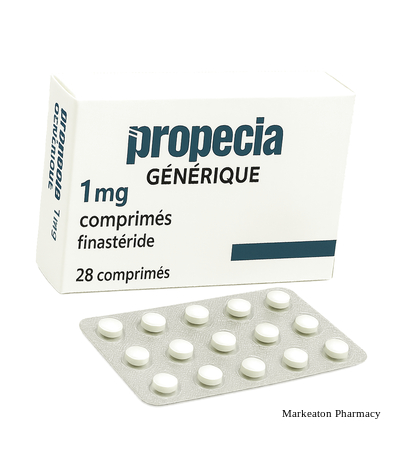
Propecia, the brand name for finasteride 1 mg, is classified as a Prescription Only Medicine (POM) in the United Kingdom. You cannot legally purchase Propecia or generic finasteride without a valid prescription from a qualified prescriber. Online pharmacies like Markeaton Pharmacy can dispatch Propecia or generic finasteride only upon receipt of a scanned or electronic prescription. Attempts to buy without prescription are unlawful and unsafe. Always consult a healthcare professional before starting finasteride, especially because suitability, dosing and potential side effects require medical assessment.
What is generic Propecia (finasteride)?
Definition of generic finasteride
Generic finasteride contains the same active ingredient—finasteride—as branded Propecia. Generic versions meet the same regulatory standards for quality, safety and efficacy as the original. The main differences lie in the inactive ingredients, tablet appearance, packaging and price. Generic finasteride typically costs significantly less than the branded product, making it a cheaper option for ongoing maintenance therapy.
Why choose generic over branded?
Cost savings is the primary factor driving patients toward generic finasteride. Given the long-term nature of hair loss prevention, even small price differences per tablet can accumulate into substantial savings over months and years. Additionally, reputable online pharmacies ensure that generic finasteride batches are sourced from MHRA-approved manufacturers, providing equivalent therapeutic benefit to branded Propecia.
General information about finasteride
What is finasteride?
Finasteride is a selective 5-alpha reductase inhibitor. It blocks the conversion of testosterone to dihydrotestosterone (DHT), a hormone linked to hair follicle miniaturisation in male pattern baldness. By reducing DHT levels in the scalp, finasteride slows hair loss progression and promotes hair regrowth in men with androgenic alopecia.
Historical development
Originally developed for benign prostatic hyperplasia (BPH), finasteride was observed to reduce prostate size and improve urinary symptoms. Clinical observations of hair growth in treated men led to the 1 mg dosage formulation specifically for hair loss, marketed under the Propecia brand since the late 1990s.
Active ingredient and excipients
The active pharmaceutical ingredient is finasteride 1 mg per tablet. Excipients vary by manufacturer and can include lactose monohydrate, maize starch, microcrystalline cellulose, gelatin, sodium starch glycolate, magnesium stearate and coloring agents. Generic tablets may differ in appearance but must comply with bioequivalence criteria.
Pharmacokinetics overview
After oral ingestion, finasteride is well absorbed, reaching peak plasma concentration within 1–2 hours. Its half-life is approximately 6–8 hours in men aged 18–60, extending slightly in older individuals. Steady-state levels are typically achieved after daily dosing for several days. Finasteride is metabolised primarily by CYP3A4 in the liver and excreted as inactive metabolites in urine and feces.
How finasteride works against hair loss
Role of DHT in androgenic alopecia
Dihydrotestosterone binds to androgen receptors in genetically susceptible hair follicle cells, triggering a progressive shortening of the hair growth phase (anagen) and lengthening of the resting phase (telogen). Over time, follicles shrink and hair becomes thinner and shorter.
Mechanism of action of finasteride
Finasteride selectively inhibits type II 5-alpha reductase, the enzyme responsible for converting testosterone to DHT in hair follicles and prostate tissue. By lowering scalp and serum DHT levels by up to 70–80%, finasteride reverses follicular miniaturisation and promotes thicker, stronger hair shafts.
Onset and duration of effect
Visible improvement in hair count and thickness may take 3–6 months of continuous daily dosing. Maximum effect is often observed after 12 months. If treatment is discontinued, DHT levels rebound within days, and hair loss typically resumes to the pre-treatment rate within 6–12 months.
Who benefits most?
Men under 40 with mild to moderate vertex or frontal hair loss show the best response. Early initiation, before extensive baldness occurs, produces more noticeable results. Finasteride is not indicated for use in women or children due to unknown safety and lack of proven efficacy.
Price, buying options and cheapest generic offers
How much does generic finasteride cost?
Prices vary by pharmacy, pack size and source. At Markeaton Pharmacy, generic finasteride 1 mg tablets are supplied in packs of 28, 84 or 168 tablets. Typical UK online prices range from £15 to £45 per month supply, depending on bulk purchase discounts, manufacturer and ongoing offers. We regularly run promotions on larger packs to reduce the unit price to under £0.20 per tablet.
Why are there price differences?
Generic market competition, import costs, quality assurance processes, packaging costs and pharmacy overheads influence final retail price. Lower cost may reflect sourcing from lower-cost manufacturing sites or bulk procurement but must not compromise safety and quality. Markeaton Pharmacy sources from MHRA-inspected facilities to ensure the cheapest genuine generic stock.
| Product | Strength | Pack size | Approx. Price | Price per tablet | Note |
|---|---|---|---|---|---|
| Generic Finasteride A | 1 mg | 28 tablets | £15.00 | £0.54 | Standard pack |
| Generic Finasteride B | 1 mg | 84 tablets | £30.00 | £0.36 | 3 month supply |
| Generic Finasteride C | 1 mg | 168 tablets | £45.00 | £0.27 | 7 month supply, cheapest unit price |
Strengths, formulations and pack types
Available strengths
For male pattern baldness, finasteride is licensed at a single dose of 1 mg daily. Higher strengths, such as 5 mg, are indicated for benign prostatic hyperplasia (BPH) and are dispensed only on prescription for that indication. Always verify the product is authorised for hair loss treatment before purchase.
Formulations
Most finasteride tablets are film-coated and intended for oral administration. Some formulations include lactose, which may be unsuitable for lactose-intolerant patients. If lactose-free generics are required, consult our pharmacy team for alternatives.
Pack considerations
Prescription requirements, packaging design, blister packs versus bottles, and bulk supply all influence the pack offered. The legal supply category (POM) means each dispensed pack must comply with controlled dispensing procedures, including patient information leaflets and advisory labels.
Generic vs branded packaging
Branded Propecia boxes include original Merck labeling and leaflet. Generic packs bear the manufacturer’s name and packaging design but include identical dosing instructions and safety information as per regulatory approval.
Male pattern baldness and androgenic alopecia
What is male pattern baldness?
Androgenic alopecia is a hereditary condition characterised by progressive hair thinning in a defined pattern. It affects up to 50% of men by age 50, with the vertex (crown) and frontal hairline most commonly involved.
Stages and classification
The Norwood scale classifies progression from mild thinning (Type I) to extensive hair loss (Type VII). Treatment suitability and expected finasteride response vary with Norwood grade; early stages respond best.
Psychological and social impact
Hair loss can affect self-esteem, body image and emotional wellbeing. Effective treatment can improve quality of life, instil confidence and reduce anxiety related to appearance.
Role of combined therapy
Finasteride can be combined with topical treatments such as minoxidil, low-level laser therapy or ketoconazole shampoos to maximize outcomes. Clinical studies suggest combination therapy yields superior hair regrowth compared with monotherapy.
UK legal classification: POM and online sale
Prescription Only Medicine
Finasteride 1 mg for hair loss is legally classified as POM. It requires a valid prescription supplied by a registered medical professional or a private prescriber commissioned by the NHS or private clinic.
Online pharmacy regulations
MHRA-licensed online pharmacies like Markeaton Pharmacy can sell POMs by securing an electronic or paper prescription before dispatch. Our process includes verifying prescriber credentials, medicine authenticity and responding to clinical queries from patients.
Why no over-the-counter sale?
Due to potential side effects, contraindications and need for monitoring, finasteride remains prescription-only. Self-diagnosis and unsupervised usage can mask serious conditions or lead to improper dosing.
Responsible supply standards
Under the Human Medicines Regulations 2012, pharmacies must maintain accurate records, conduct consultations and offer written information. Online supply follows the same legal framework as in-store dispensing.
Alternatives for hair loss treatment
Topical minoxidil
Minoxidil 2% or 5% solution and foam are available over the counter. They act as vasodilators to stimulate hair follicles but may cause scalp irritation and require twice-daily application.
Low-level laser therapy (LLLT)
Devices such as combs and helmets emitting red light can improve hair density in some users. Evidence varies, and treatment cost ranges widely.
Platelet-rich plasma (PRP)
PRP injections involve concentrating a patient’s blood platelets and injecting them into the scalp. Clinical trial results are mixed but some report improved hair count and thickness.
Hair transplant surgery
Follicular unit extraction (FUE) and transplantation can deliver permanent hair restoration. It is invasive, costly and requires experienced surgical teams.
Natural supplements and nutraceuticals
Biotin, saw palmetto, caffeine-based shampoos and certain vitamins may support hair health. Scientific evidence is limited compared with approved pharmaceuticals.
Propecia compared with other hair loss medicines
Finasteride vs dutasteride
Dutasteride inhibits both type I and II 5-alpha reductase, reducing DHT more comprehensively. It is not licensed for male pattern baldness in the UK and is prescribed off-label or under specialist supervision.
Finasteride vs topical minoxidil
Finasteride targets hormonal pathways, whereas minoxidil works locally to increase blood flow. Combination therapy often yields better results. Finasteride oral dosing is once daily, while minoxidil requires twice-daily topical application.
Finasteride vs herbal remedies
Herbal products like saw palmetto show weak 5-alpha reductase inhibition in vitro but lack robust clinical trial support. They are not MHRA-authorised for hair loss.
| Feature | Finasteride 1 mg | Minoxidil 5% | Dutasteride |
| Drug class | 5-alpha reductase inhibitor | Vasodilator | Dual 5-alpha reductase inhibitor |
| Administration | Oral once daily | Topical twice daily | Oral once daily |
| License in UK | Yes, POM | Yes, OTC | No for alopecia |
| Common side effects | Sexual dysfunction | Scalp irritation | Higher risk profile |
Lifestyle, diet and non-pharmacological measures
Nutrition and hair health
A balanced diet rich in protein, omega-3 fatty acids, vitamins A, C, D and minerals such as zinc and iron supports hair follicle function. Deficiencies can exacerbate hair thinning.
Stress management
Psychological stress may trigger telogen effluvium, a diffuse hair shedding. Stress reduction techniques—including mindfulness, exercise and adequate sleep—can mitigate additional hair loss.
Scalp care
Avoid harsh chemicals, excessive heat styling and tight hairstyles that cause traction alopecia. Gentle shampooing, scalp massage and the use of mild conditioners can maintain scalp health.
Smoking and alcohol
Smoking impairs scalp blood flow and increases oxidative stress. Excessive alcohol consumption can disrupt nutrient absorption. Limiting these factors supports overall hair quality.
Side effects and tolerability
Common side effects
Sexual dysfunction—decreased libido, erectile dysfunction or reduced ejaculate volume—occurs in up to 2–4% of users. Most cases resolve spontaneously with continued use or after discontinuation.
Uncommon and rare effects
Breast tenderness or enlargement (gynecomastia), testicular pain, depression and allergic skin reactions are reported rarely. Persistent or severe symptoms warrant medical review.
| System | Possible side effects |
| Reproductive | Decreased libido, erectile dysfunction |
| Psychiatric | Depression, mood changes |
| Breast | Tenderness, enlargement |
| Skin | Rash, hypersensitivity reactions |
Monitoring and tolerability
Regular follow-up with your prescriber ensures side effects are identified early. Baseline assessment of mood and sexual function can help distinguish drug-related changes from other causes.
What if side effects persist?
Discuss dose reduction, drug holidays or alternative treatments with your healthcare professional. Never discontinue prescription medicine without medical advice.
Long-term use and monitoring
Duration of therapy
For sustained benefit, finasteride must be taken indefinitely. Stopping treatment reverses gains within 6–12 months. Annual reviews assess efficacy, side effects and ongoing suitability.
Laboratory monitoring
Routine blood tests are not mandatory for finasteride 1 mg, but monitoring liver function and prostate-specific antigen (PSA) can be considered in high-risk individuals or those with a BPH history.
Psychological impact
Long-term sexual side effects or mood changes should prompt discussion. Psychological support or specialist referral may be necessary for persistent symptoms affecting quality of life.
Warnings, contraindications and interactions
Who should not use finasteride?
- Women and children: risk of birth defects if handled by pregnant women.
- Men with known hypersensitivity to finasteride or excipients.
- Patients with severe liver impairment: may alter drug metabolism.
- Individuals with prostate cancer: can affect PSA readings and mask disease progression.
Drug interactions
Finasteride has a low potential for drug–drug interactions but may interact via CYP3A4 modulators. Inform your doctor of concurrent medications, particularly antifungals, macrolide antibiotics and certain anticonvulsants.
Special populations
Older adults often tolerate finasteride similarly to younger men. However, comorbidities and polypharmacy necessitate careful review. No dose adjustment is typically required for mild to moderate hepatic impairment.
Pregnancy and breastfeeding
Finasteride is contraindicated in women who are or may become pregnant. Exposure can cause abnormalities in male fetal genital development. Handling crushed tablets or powder is discouraged for pregnant caregivers.
Additional information about ordering Propecia
How to order online
1. Complete our online consultation form; 2. Upload a valid prescription from your doctor; 3. Choose pack size and generic brand; 4. Select delivery option; 5. Pay securely via credit/debit card or PayPal. Orders dispatched within 24 hours of prescription verification.
Delivery and returns
Standard UK delivery: 2–3 working days free on all Propecia or generic finasteride orders over £30. Next-day delivery available at extra cost. Returns accepted within 14 days unopened, per our merchant return policy.
Customer support
Our pharmacist team is available by phone +44 1332 344049 or email [email protected] to answer clinical queries, advise on side effects and assist with order tracking.
Where to find more information
Further details are available in the patient information leaflet supplied with every pack. Official UK medicine information can be accessed via the MHRA website and the electronic Medicines Compendium (eMC).